Recognition of Lifetime Achievement
The Honorary Doctorate formally recognizes an exceptional career, sustained contribution to society, and long-term leadership with global relevance.

The Doctor Honoris distinction of the ECEID is conferred upon distinguished leaders, eminent executives, and creative visionaries in recognition of their outstanding contributions to management, technology, the arts, and other domains of innovation and societal advancement.
Given for extraordinary lifetime achievement, exceptional contributions to the motion picture arts and sciences of any discipline, or outstanding service to the Academy.
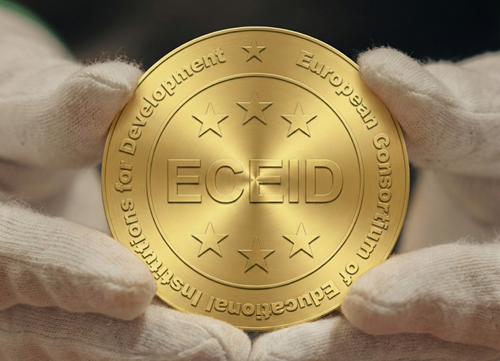
The Honorary Doctorate formally recognizes an exceptional career, sustained contribution to society, and long-term leadership with global relevance.
Laureates are selected for integrity, ethical conduct, and service to the public good in areas such as education, innovation, sustainability, culture, or social development.
Recipients are highlighted across ECEID’s international network and partner institutions, reinforcing their influence and amplifying their message.
Each distinction is awarded during an official ceremony. The honoree receives an official diploma and ceremonial insignia representing the dignity of the title.
Ans- An honorary doctorate is generally awarded to a person who has achieved distinction in the fields of higher education, the arts, business, public service, philanthropy, the sciences, or social service. The recipients may be of international fame as public figures, scholars, artists, or other leading figures.
Each member institution retains the autonomy to define who may submit nominations: some authorize faculty, alumni, or external stakeholders, while others restrict submissions to internal committees, designated academic units, or recognized interest groups. All participating institutions are required to comply with the official ECEID Nomination Guidelines, which set the overarching standards and procedural expectations.
While recipients are generally invited to attend the conferral ceremony, attendance is not mandatory. ECEID may also confer the degree in absentia if the recipient is unable to be present, in accordance with the Council’s official procedures.
It should be noted that an honorary doctorate is not an academic degree and therefore cannot be used or recognized as an academic or professional qualification. Accordingly, recipients must clearly distinguish it from an earned doctorate by using the title Dr. (h.c.) — honoris , “for the sake of honor.” A Dr. (h.c.) designation does not confer the legal rights, academic privileges, or professional status associated with an earned doctoral degree.